Grant funding may be available for eligible home and business chargepoints in Exeter. According to the Office for Zero Emission Vehicles, OZEV chargepoint grants provide up to £500 per socket until March 31st 2027. This guide to EV charger installation in Exeter explains what to consider before planning a project.
It’s sensible to look at funding before arranging installation, particularly if you’re planning charging at a workplace or commercial premises as well as at home. Eligibility depends on the grant’s criteria, so the headline amount does not guarantee that every installation will qualify.
This guide explains grant routes, installer considerations and what a professional assessment involves. It also covers the practical differences between home and business installations, factors that shape the work, and where JB Electrical South West serves across Torbay and nearby Devon, including Paignton, Torquay, Brixham, Newton Abbot, Totnes, Dartmouth, Teignmouth and Dawlish. The property, electrical supply and intended use can all affect the installation plan.
Key Takeaways
- Eligible installations may qualify for OZEV chargepoint grants of up to £500 per socket until March 31st 2027; the criteria determine which grant route may apply.
- When assessing an installer, look for familiarity with BS 7671 and safety measures such as PEN fault protection, as advised by the British Standards Institution (BSI).
- Home and workplace charging have different practical needs, so consider who will use the charger and where vehicles are usually parked.
- For commercial premises, the right installation starts with understanding how charging will fit the site and its day-to-day use.
- Find out which Exeter and East Devon areas are served and what information can help shape an installation assessment.
Installer qualifications and electrical industry memberships
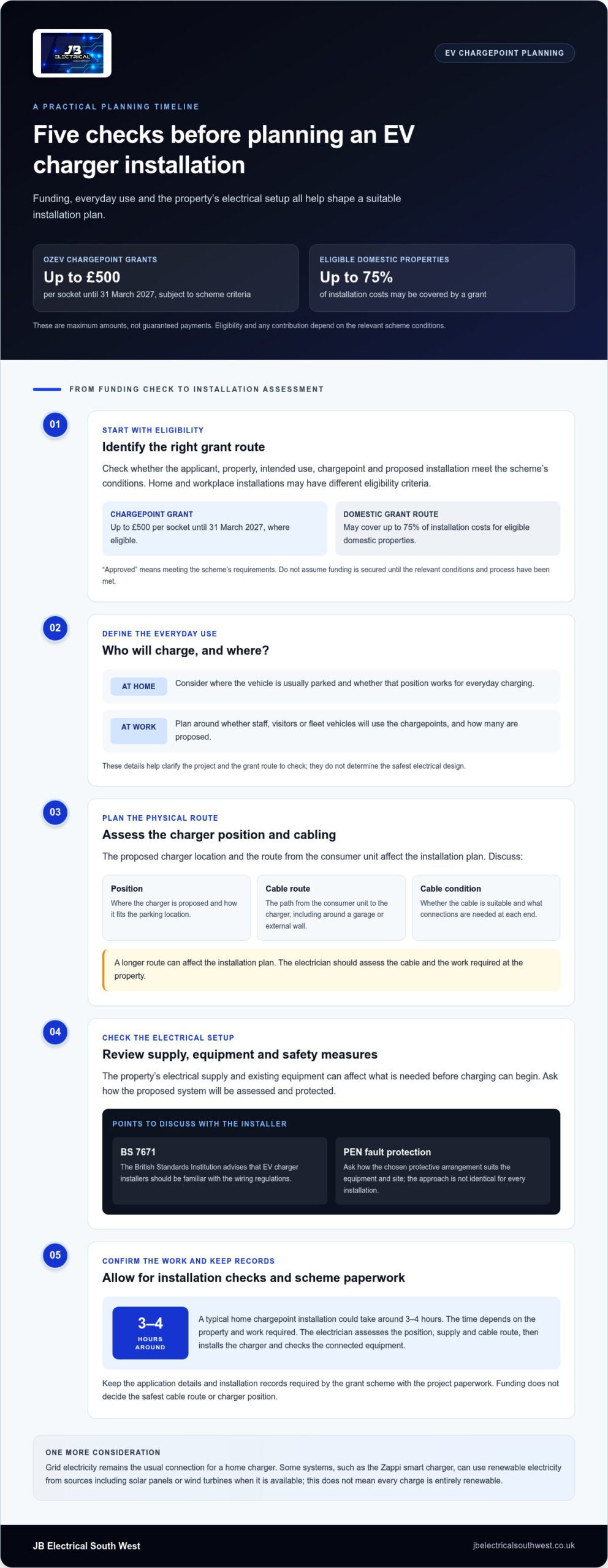
A typical home chargepoint installation could take around 3-4 hours, depending on the property and the work required. The electrician assesses the proposed charger position, electrical supply and cable route, then completes the installation and checks the connected equipment.
For a safe installation, experience with general electrical work needs to include the specific demands of electric vehicle charging. According to the British Standards Institution (BSI), EV charger installers should be familiar with wiring regulations BS 7671 and safety standards such as PEN fault protection. This matters because the charger connects to a vehicle and the property’s electrical system, so the design and protective measures must suit the installation.
Ask which qualified electrician will carry out the work, what electrical qualifications they hold, and how they assess EV charging systems. When comparing installers, focus on who will do the work and how the installation will be assessed. Clear answers help you compare proposals based on their technical approach, not just the charger model.
Before work begins, discuss the cable route from the consumer unit to the charger, as well as the cable’s condition and suitability and the connections needed at each end. A long route around a garage or external wall, for example, may affect the installation plan. The electrical supply and existing equipment matter too. These checks can identify whether other work is needed before charging can begin.
Pay particular attention to safety protection. PEN fault protection addresses a potential fault associated with the supply’s protective earth and neutral arrangement. The appropriate approach depends on the equipment and site, so the electrician should explain how the chosen arrangement protects the installation. Do not assume every charger or property uses the same method.
Grid electricity remains the usual connection for a home charger, while some systems can make use of renewable generation. For example, the Zappi smart charger can use 100% renewable energy from sources such as solar panels or wind turbines when available. This depends on renewable electricity being available at the time; it doesn’t mean the vehicle is always charged entirely from those sources.
Keep planned installation separate from urgent electrical assistance. If a charger or cable is visibly damaged, or charging is accompanied by a burning smell, stop using the equipment and seek professional help. An electrician can assess the fault and determine whether the charger, cabling or another part of the electrical system needs attention.
OZEV-approved installations and grant eligibility
Grant support can reduce the upfront cost of eligible chargepoints, but the scheme’s conditions matter. Check how the grant applies to your property, intended use and proposed installation before planning around funding.
Government-backed grant funding
In the UK, eligible domestic and commercial properties can access EV charger grants through the Office for Zero Emission Vehicles (OZEV). The available route depends on the property and scheme criteria, so homeowners and businesses should identify the relevant grant before arranging work. OZEV chargepoint grants provide up to £500 per socket until March 31st 2027.
For eligible domestic properties, government-backed grants may cover up to 75% of installation costs. That percentage is a maximum, not a promise of a particular payment. The grant amount and any contribution required depend on the scheme’s conditions and the installation. Compare the grant limit with the proposed work, rather than assuming it will cover the full chargepoint project.
Planning and grant eligibility
First establish whether the property and applicant meet the grant route’s criteria. Then consider the number of chargepoints, their intended use and the proposed location. These details clarify what the project involves before work is booked. Home and workplace installations may have different eligibility criteria, so do not assume one application route covers both.
“Approved” means meeting the scheme’s requirements, not simply that a chargepoint can be installed. Read the grant conditions for the relevant property type and check that the proposed chargepoint and installation meet them. Keep grant eligibility separate from the electrical design: funding does not determine the safest cable route or a suitable charger position.
For a business, plan around how staff, visitors or fleet vehicles will use the charging points. At home, consider where the vehicle is usually parked and whether that location suits everyday charging. These practical details can shape the installation plan and help ensure the grant paperwork matches the proposed work.
Timing matters too. The stated OZEV grant period runs until March 31st 2027, so include that date when planning an application and installation. Avoid treating a grant as secured until the relevant scheme conditions and process have been met. Retain the application details and installation records required by the scheme, and keep them with the project paperwork for future reference.
After installation, grant administration and charger aftercare are separate considerations. Keep documents about the chargepoint and completed work together for scheme records or future maintenance. At a workplace, make sure the person responsible for the premises knows where the records are kept and which chargepoints they relate to.
Service areas around Exeter and East Devon
For an EV charger enquiry, the property address, parking arrangement and proposed charger position are useful starting details. They help the electrician understand access, cable routing and the work involved. Properties throughout the region can have different layouts, so each installation needs to be considered in its specific setting.
A flat or home without a driveway is not automatically ruled out for charging. Consider where the vehicle can park, whether a cable route can reach that space, and whether the property arrangements allow the proposed work. Shared parking, for example, raises different access considerations from a charger beside a private garage.
For an enquiry within JB Electrical South West | Domestic & Commercial Electrician in Devon’s service area, provide the full address and describe the parking space. A photograph of the parking area and likely charger position can help explain the layout before an on-site assessment. Mention whether the property is a house, flat or business premises, and identify any shared access areas. These details help focus the visit on the installation conditions.
JB Electrical South West | Domestic & Commercial Electrician in Devon serves Paignton, Torquay, Brixham, Newton Abbot, Totnes, Dartmouth, Teignmouth and Dawlish, as well as the wider Torbay and South Devon region. A garage charger may allow a more direct cable route than a unit positioned across a larger property. For home charging, note where the vehicle usually stands and whether the charger will be exposed to the weather. Business enquiries should identify which parking bays need charging access.
These locations provide useful context for enquiries across the service area, but the property address remains essential because access and building layouts vary. Share any access instructions and explain whether the installation is for a home, a landlord-managed property or a commercial site.
Maintenance matters particularly for chargepoints installed outdoors and exposed to the elements. A service assessment can cover electrical connections and cabling, weatherproof seals and enclosures, software and smart-charging functions, as well as the unit’s overall condition and performance. These checks can help identify wear or damage that affects everyday charging.
A loose-looking enclosure, damaged cable or charging function that no longer behaves as expected merits professional attention. Keep the charger’s installation details accessible and describe the issue clearly when arranging servicing. This helps the electrician understand whether the concern relates to the chargepoint, its cabling or its operation. Maintenance needs can differ between a domestic unit and a workplace charger, depending on location and use.
Describe when the issue occurs, whether it affects every charging session or only certain situations, and whether there is visible damage. If the charger is outdoors, mention any concerns about its enclosure, seals or cabling. Keeping the installation information to hand can help explain the setup and focus a service assessment on the unit’s condition, connections and smart-charging functions.
The qualified electricians providing EV charger installation Exeter and across the service area have over 50 years of experience. Give them the property address and a clear description of the parking arrangement, access and intended charger position so the installation can be considered in its setting. For business premises, identify the bays that need charging access; for shared parking, explain the relevant access arrangements.
Home and business EV charger installation in Exeter
Home and commercial sites need different charging plans. In either case, start by identifying who will use the chargepoint, where the vehicle is parked and how often charging is needed. These details help shape the location and installation design.
At home, the charger is usually planned around the regular parking space. A garage wall or exterior wall may be suitable, depending on the cable route and the property’s electrical setup. The electrician assesses the proposed position and supply before confirming the work. A longer route between the consumer unit and charger can affect the installation plan.
Charging speed is another decision. A 7kW home charger tops up a car roughly twice as fast as a 3kW unit. The right choice depends on the vehicle, how long it is usually parked and the household’s charging routine. A car left at home overnight has different needs from one that must be ready between shorter stops.
For a business, begin with the site’s intended use. Staff parking, visitor bays and fleet vehicles can each create different charging patterns. Map the parking spaces that need access and consider how vehicles move through the site. This gives the electrician useful context for planning charger positions, cable routes and the electrical work involved.
Commercial charging also needs to fit normal operations. A workplace with staff parking throughout the day, for example, may need a different plan from a depot where vehicles return to the same bays. Decide who needs to charge and when, then discuss how the proposed points could serve them. Choose the number and position of chargers based on the site’s use, rather than in isolation.
At home and at business premises, the existing electrical installation affects the scope. The electrician considers the supply, consumer unit, proposed charger position and cable route. If the assessment identifies other electrical work, the options can be explained before installation proceeds. An on-site assessment is essential; assumptions about a property’s suitability are not enough.
Good preparation makes the discussion clearer. Provide the property address, usual parking arrangement and intended users. For a commercial site, describe staff, visitor or fleet use. At home, explain whether the vehicle parks in a garage or outdoors. This helps the installer understand the project and discuss a practical arrangement for Exeter.
Whether the project is domestic or commercial, the aim is a charging setup that suits the property and its daily routine. An assessment brings together the supply, cable route, charger position and intended use, giving the installation plan a clear basis before work begins.
Commercial EV charger installation
Workplaces and commercial properties in Exeter can install chargepoints for staff, visitors or business vehicles. The right arrangement depends on who needs to charge, where vehicles park and how the site operates during the day.
Start by mapping the parking areas and identifying the users. An office might prioritise staff bays, while a customer-facing business may want points near visitor parking. A depot, by contrast, may need charging positioned around fleet movements. These examples give the electrician a clear picture of the site’s purpose.
Next, consider how long vehicles usually stay. Staff cars parked throughout the working day offer different charging opportunities from delivery vehicles that return between journeys. The intended pattern can inform the number and location of charging points, as well as the installation plan. Avoid choosing positions before considering how vehicles enter, park and leave.
The site assessment should cover the existing electrical supply, consumer unit, cable routes and proposed charger locations. A car park separated from the main building, for example, may need a different cable route from bays beside a workplace wall. The electrician can use these details to explain the work involved and identify electrical issues that may affect the design.
Access is another important part of commercial planning. Consider whether visitors need clear instructions, whether staff bays are allocated, and how vehicles can reach each point without obstructing normal movement. A site manager can identify operating constraints, such as busy delivery periods or restricted parking areas. Sharing these details early helps shape a proposal around the site.
Think about who will look after the points once they are installed. A facilities manager, business owner or fleet coordinator may need to know where installation records are kept and how to report a fault. For example, a shared workplace can agree who handles day-to-day charger queries so staff know whom to tell.
Commercial work benefits from a clear scope. Record the intended users, parking layout, proposed charger positions and known access limits. An on-site assessment can then relate those requirements to the property’s electrical setup. If the premises need more than charging work, related commercial electrical installations and repairs may also form part of the wider project.
A well-planned commercial installation starts with the site’s real use, not a generic layout. If you’re planning charging points for an Exeter workplace or business property, discuss a commercial installation and the practical requirements of your site.
JB Electrical South West | Domestic & Commercial Electrician in Devon: Domestic electrical installations and repairs
JB Electrical South West | Domestic & Commercial Electrician in Devon carries out domestic and commercial electrical work to support your property’s wider needs. If an assessment identifies work involving the existing installation, discuss the options before deciding how to proceed.
For homeowners, this may include electrical installations and repairs, or an assessment of whether a full or partial house rewire is appropriate. A consumer unit upgrade may also be relevant, depending on the installation’s condition and requirements. These decisions should follow an assessment, not assumptions based on the property’s age alone.
Businesses can turn to JB Electrical South West for commercial electrical installations and repairs. Explain how the premises are used and what work you are planning, so the next steps can be considered in context.
For advice about your property’s electrical work, contact JB Electrical South West | Domestic & Commercial Electrician in Devon or visit the website.
Take the next step towards a suitable charging setup
Before arranging an on-site assessment, write down your priorities. Note who will use the charger, how the property is occupied and what you want charging to make easier. For a workplace, include the person responsible for the premises; at home, consider how charging fits your routine. These points give the discussion a practical starting point.
For properties across Torbay and nearby Devon, planning an EV charger installation can highlight wider electrical needs. JB Electrical South West | Domestic & Commercial Electrician in Devon carries out domestic and commercial electrical installations and repairs, as well as full and partial house rewires. The appropriate work depends on the property and an on-site assessment.
If you’re ready to discuss your requirements, contact JB Electrical South West to talk through the next step. A clear account of your plans can help you move forward with confidence.
Frequently Asked Questions
Can I Get Grant Funding For EVC Installation?
Possibly, if your property and project meet the relevant grant scheme’s criteria. UK support is available for eligible domestic and commercial properties, but eligibility depends on the scheme and your circumstances. Before committing to work, identify whether the application relates to a home, rental property or business premises. Keep the proposed charger position and intended use clear, as these details can help establish which grant route may fit.
What electrical supply and wiring are needed for home EV charger installation
An electrician should assess the property’s electrical supply, the route from the consumer unit to the charger, and the cable’s condition and suitability. The connections and existing equipment also need checking, as additional work may be required.
How to find an OZEV-approved EV charger installer in Exeter
Check the OZEV grant conditions for the property type and confirm that the proposed chargepoint and installation meet them. Ask which qualified electrician will do the work, what qualifications they hold, and about their experience with EV charging systems.