Registration matters, but it is not the whole picture. NICEIC is one electrical registration scheme, while a commercial electrician in Plymouth may be registered through another, such as NAPIT. Check whether a project specifically requires a particular scheme, and consider what documentation the work calls for.
Commercial electrical work also needs to suit the building and the way it’s used. A shop, office or other business premises may need design and installation, electrical testing, safety systems, repairs or maintenance, depending on its condition and requirements.
This article explains what commercial electrical services can involve and what to consider when arranging work. You’ll learn how electrical testing and EICRs assess an installation, which signs may call for fault finding, and what to look for in a clear quote. Whether you’re planning an installation or dealing with a fault, these points can help you define the job and understand the next steps.
Key Takeaways
- Commercial electrical work can cover design, installation, testing, repairs and ongoing maintenance, depending on the building’s needs.
- According to the UK Government, landlords are responsible for arranging an Electrical Installation Condition Report every 5 years.
- Testing and an EICR can help identify issues with an electrical installation and clarify what may need attention.
- Safety systems, repairs and maintenance should be considered in the context of how the premises are used.
- When arranging work with a commercial electrician Plymouth businesses trust throughout Devon—including Plymouth, Paignton, Torquay, Brixham, Newton Abbot, Totnes, Dartmouth, Teignmouth and Dawlish—consider the property’s requirements and the scope of the job when discussing the next steps.
Commercial electrical design, installation, maintenance and repairs
For commercial premises in Plymouth, electrical work can range from planning a new installation to repairing faults in existing wiring. Start by describing the building, the work required and any access or operating constraints. Then review the proposed scope and quote to confirm they address the needs you’ve identified.
Electrical design and installation
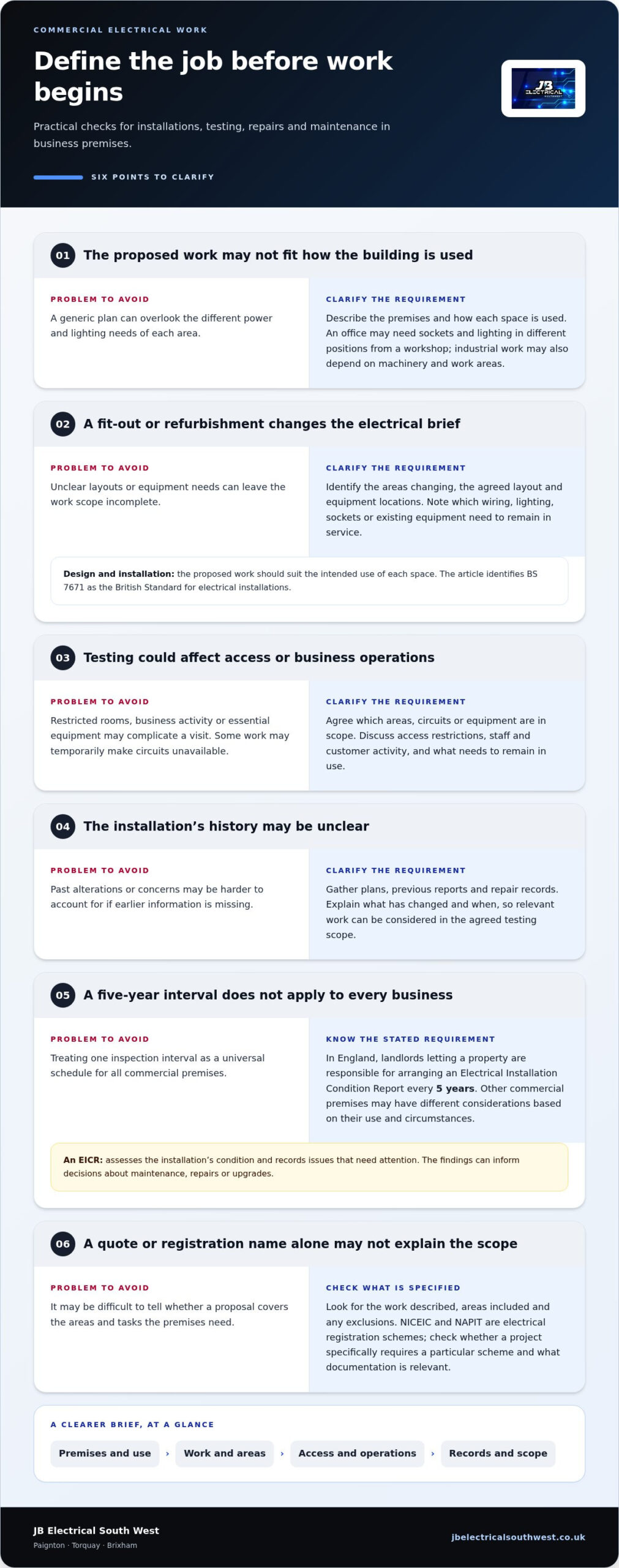
Design considers how each area will be used, where power and lighting are needed, and how the electrical installation will support the premises. For example, an office layout may need sockets and lighting in different positions from a workshop. Electrical installations should comply with BS 7671, the British Standard for electrical installations, according to the British Standards Institution. Review the proposed work against the intended use of each space.
Commercial fit-outs and refurbishments
A shop fit-out, office refurbishment or change of use may involve new wiring, lighting, sockets or upgrades to existing installations. Plan the work around the agreed layout, equipment locations and access to affected areas. Before it begins, identify which parts of the premises are changing and which electrical equipment needs to remain in service.
Industrial premises have different demands from offices and retail units. Machinery, work areas and existing wiring all affect the installation and maintenance required. A commercial electrician in Plymouth can assess the site and identify the work needed for the stated requirements. For industrial electrical installations, the scope should clearly identify the equipment and areas involved, rather than treating the building as a standard office fit-out.
Maintenance and repairs can address damaged fittings, unreliable lighting or sockets that no longer work as expected. Describe where the problem occurs and what equipment is affected to help focus the assessment. Electrical fault finding can identify the cause before repairs are planned. Avoid repeated resets or improvised fixes, which do not resolve the underlying cause.
An Electrical Installation Condition Report assesses an installation’s condition and records issues that need attention. In England, landlords letting a property are responsible for arranging an Electrical Installation Condition Report every 5 years, according to the UK Government. This requirement applies to landlords in that context; other commercial premises may have different considerations based on their use and circumstances. A report can help inform decisions about maintenance, repairs or upgrades.
When reviewing a quote, check that it describes the work, the areas included and any exclusions. NICEIC approval refers to registration with a particular scheme, so consider whether the project requires that scheme and what documentation is relevant. A clear scope helps you judge whether the proposed installation or repair addresses the premises’ needs.
Commercial electrical testing and EICRs
Commercial testing needs a defined scope, suitable access and a plan for areas that must keep operating. Before arranging it, identify the premises and the circuits or equipment of concern. This helps make the visit relevant to the business’s requirements.
Electrical testing and certification
Ask what the testing covers and what records you’ll receive afterwards. The agreed scope may focus on particular areas, circuits or equipment, depending on the request. For example, if an office area has recently been altered, explain what changed so the work can be considered alongside the existing installation.
Gather documents from earlier electrical work for the electrician. Plans, previous reports and repair records can help explain changes to the premises. If testing follows an installation or alteration, describe what was changed and when, so the relevant work can be included in the agreed scope.
Inspections and testing
Testing may require access to electrical equipment and the areas served by its circuits. Tell the electrician about restricted rooms, stored items or business activities that could affect access. A café, for example, may need to coordinate access to a back-of-house area to avoid disrupting its normal use.
Agree how the visit will fit around staff, customers and essential equipment. Some work may require circuits to be unavailable temporarily. Discuss what must remain in use and arrange suitable access before the appointment, rather than leaving operational constraints until the visit begins.
Five-yearly testing and inspection
A five-year interval is not a universal inspection schedule for every commercial premises. Appropriate arrangements depend on the property and its circumstances. Landlords in England are legally required to have an EICR every five years. Keep tenancy and property records together to track inspection dates and plan access.
For other businesses, consider the installation’s history, changes to the premises and any previous concerns when planning checks. A refurbishment, new equipment or a change in how an area is used may prompt a discussion about whether further inspection is appropriate. Keep decisions and completed work with the site’s maintenance records.
After testing, read the documentation alongside the agreed scope and note any actions identified. If follow-up work is recommended, ask for the affected areas and proposed tasks to be made clear. JB Electrical South West carries out commercial electrical installations and repairs, including testing and EICRs, for businesses arranging inspection or subsequent work.
Safety systems for commercial properties
Using an unqualified electrician for commercial work can leave faults, unsafe installations or incomplete records. That can make it harder to understand what work was done and what needs attention next.
Safety systems should suit the way a premises is used. An office’s alarm placement and electrical equipment needs differ from those of an industrial site with machinery, storage areas and separate work zones. A site assessment helps identify which systems and checks are relevant to the building.
Electrical safety and standards
Electrical installations should comply with BS 7671, the British Standard for electrical installations, according to the British Standards Institution. For a business, this is relevant to fixed wiring and electrical work carried out during an installation or alteration. Keep the work scope and any resulting documentation with the premises’ electrical records.
Domestic properties and commercial premises have different layouts and uses, so a system suitable for a home may not suit a workplace. A workshop’s equipment and work areas, for example, call for different considerations from a small office. Let the purpose of each area guide the electrical safety arrangements.
Safety systems and checks
Smoke, heat and carbon monoxide alarms can form part of a property’s safety arrangements. Their suitability and positioning depend on the building and its use. A kitchen, plant area and staff room each present different conditions, so alarm installation should take account of the location and the risks being addressed.
PAT testing refers to the examination of portable electrical equipment, such as a kettle or desk fan. It is separate from inspecting fixed wiring. Start by identifying the equipment in use, where it is located and whether there is visible damage, then discuss what inspection or testing is appropriate.
Industrial sites and contractor checks
On an industrial site, machinery, access routes and areas exposed to dust or moisture can affect how electrical work is planned. Give the electrician clear information about the equipment involved and where work will take place. This helps define access arrangements and identify site activities that may need coordination.
Registration schemes can help businesses understand an electrician’s membership or certification status. NICEIC is one recognised name in electrical certification; NAPIT is another. Check what the scheme relates to and consider it alongside the proposed scope, relevant experience and records for the work. A registration label alone does not describe every detail of a particular job.
For a useful safety review, gather alarm locations, details of portable equipment and electrical records. This information helps the electrician understand how each area is used and where further assessment may be useful. For industrial premises, include machinery and site access in the discussion.
Commercial electrical repairs and maintenance
A fault in a commercial building can affect lighting, equipment or access to part of the premises. Note what has stopped working, where it happens and whether the problem returns. These details help the electrician assess the issue in context.
Electrical fault finding
Fault finding identifies why an electrical problem is occurring before repairs are planned. For example, a circuit that trips when a particular piece of equipment is used gives the electrician a useful starting point. Note any pattern, affected area and recent changes, such as new equipment or altered lighting.
Tell the electrician whether the fault affects one socket, several lights or a wider area. This can help distinguish a local issue from one involving other parts of the installation. Do not open equipment or attempt repairs yourself; leave inspection and testing to a professional.
Electrical repairs and maintenance
Repairs address identified problems with commercial electrical installations. Depending on the assessment, work may involve faulty lighting, damaged sockets, switches or wiring. Describing the affected equipment helps define the repair scope and clarify which areas may be affected during the work.
For a repair quote, ask for the proposed work and any related checks to be set out clearly. If a repair follows a fault-finding visit, the findings should explain the issue and the work proposed. Work should be carried out with attention to applicable electrical standards and the needs of the premises.
Planned maintenance can help a business track recurring issues and the condition of its electrical equipment. Keep a simple record of the date a fault was reported, its location, the equipment affected and any repair completed. For example, repeated lighting problems in one corridor may warrant closer assessment than an isolated failed lamp.
Plan maintenance around how the building operates. An office may prioritise reliable lighting in shared areas, while a workshop may need attention focused on equipment and work zones. Note which areas are used most and when access is practical. This gives the electrician useful context for assessing work and planning repairs.
Useful details to share before an appointment include:
- Which fitting, socket, switch or equipment is affected.
- Whether the issue is constant or occurs under particular conditions.
- Any previous repairs or relevant changes to the area.
- Which parts of the premises need to remain accessible.
These details support a focused assessment, but the cause of a fault can only be established through professional inspection. A committed approach means explaining the issue, the repair options and any follow-up work in plain language. For commercial properties across the South West, clear records also help clients track recurring faults without assuming that every similar symptom has the same cause.
Commercial electrician coverage across Devon
Which commercial electricians serve Plymouth and Devon? JB Electrical South West is based in Paignton and serves Paignton, Torquay, Brixham, Newton Abbot, Totnes, Dartmouth, Teignmouth and Dawlish, as well as the wider Torbay and Devon region. Describe the site location and the work required when requesting a quote.
A business in Plymouth may need a one-off repair, planned maintenance or a larger installation. Start by describing the premises, the issue and the affected areas. A fault in a shop’s lighting, for example, calls for different planning from electrical work during an office refurbishment.
Location can affect access and the practical planning of a visit. A premises in Torquay or Brixham may have different access arrangements from one in Newton Abbot. Share the full address and any site access details so the work can be discussed in context.
Commercial premises also differ in how they operate. An office may need testing arranged around occupied rooms, while an industrial site may require access to machinery and work areas. Explain which parts of the building need to remain in use and where the electrician may need access.
JB Electrical South West serves Paignton, Torquay, Brixham, Newton Abbot, Totnes, Dartmouth, Teignmouth and Dawlish, as well as the wider Torbay and nearby Devon areas. When discussing a job, explain the property’s location and the work required, along with any access or site constraints.
For electrical testing, share existing reports and explain which areas they cover. For a consumer unit concern, describe the affected installation and symptoms noticed, without attempting electrical work yourself. If there’s an urgent electrical issue, explain the immediate problem when contacting an electrician; emergency attendance arrangements vary.
Domestic electrical work and commercial installations can both involve lighting, wiring or repairs, but the premises’ use affects the assessment. A home in Totnes and a business site in Dartmouth have different operating needs. State whether the work concerns a home or workplace, and outline any practical constraints.
Before booking, bring together the address, a concise description of the job, relevant testing records and access information. These details help define the work and provide a basis for discussing a quote. To discuss commercial electrical work for your premises, contact the team.
JB Electrical South West | Domestic & Commercial Electrician in Devon: Domestic electrical installations and repairs
JB Electrical South West | Domestic & Commercial Electrician in Devon carries out commercial electrical installations and repairs for businesses, alongside domestic electrical work. It’s a practical next step when a premises needs an installation assessed, a fault investigated or repairs planned.
For a home, the work can include full or partial rewires and consumer unit upgrades. For a business, commercial electrical installations and repairs can address the premises’ specific requirements. The right scope depends on the property and the work identified during assessment, so share clear details about the issue or planned project when requesting advice.
If you need electrical work for a home or business, contact JB Electrical South West | Domestic & Commercial Electrician in Devon to discuss the work or request a quote.
Plan the next step for your premises
Before arranging electrical work, gather the details that will help define the job: the property address, areas involved, known issues and preferred timing. For planned work, describing how the space is used can help shape a practical discussion about the scope.
If you need a commercial electrician in Plymouth, JB Electrical South West provides commercial electrical installations and repairs. Its services also include domestic electrical installations and repairs, as well as full and partial house rewires. Share the property location and work required to get a clear starting point for discussing your project.
Share what you’ve noticed or what you’re planning, and ask for a quote based on the job. Contact JB Electrical South West about your electrical work to discuss a practical next step for your property.
Frequently Asked Questions
Are you NICEIC approved electricians?
No. JB Electrical South West is NAPIT-registered, not NICEIC-approved. NICEIC and NAPIT are separate electrical registration schemes, so the specified scheme matters if a site, insurer or contract requires one. For a commercial project, describe the work and any required registration or certification criteria when requesting a quote. This helps establish whether the registration aligns with the job requirements.
Do you need an electrician in Plymouth now?
JB Electrical South West lists a 24/7 emergency service for urgent electrical issues. Explain what has happened, where it has occurred and whether any equipment or part of the premises is affected. Don’t touch exposed wiring or damaged electrical equipment. If there’s immediate danger, keep people away and contact the emergency services where appropriate. Contact the business directly to discuss the electrical problem.
Do you carry out Electrical Installation Condition Reports (EICRs)?
Yes. JB Electrical South West carries out Electrical Installation Condition Reports for homes and businesses. An EICR provides a formal record of an installation’s condition and can be useful during a property handover or when reviewing maintenance records. When arranging one, explain the property type and any specific areas you want assessed, so the inspection scope is clear.
Do you offer free quotes?
Yes. JB Electrical South West offers free, no-obligation quotes. Share the property location, type of work and any relevant plans or existing reports. A request for additional commercial lighting, for example, needs different details from a fault repair. A clear description helps shape a quote around the work involved, without committing you to proceed.
What areas do you cover?
JB Electrical South West serves Paignton, Torquay, Brixham, Newton Abbot, Totnes, Dartmouth, Teignmouth and Dawlish, as well as the wider Torbay and Devon region. Include the property address when describing the job. For a business site, mention access arrangements and any practical location details that could help plan the work.
What questions should I ask a potential electrician?
Ask what the quote includes, which parts of the premises it covers and what documentation you’ll receive. You can also ask about the electrician’s registration, how the work will fit around business operations, and whether follow-up repairs are included or quoted separately. If a project affects a customer area, discuss access and how the work can be organised around its use.
What commercial electrical services do Plymouth electricians offer?
Commercial electrical work can include new installations, electrical testing and EICRs, fault finding, repairs and planned maintenance. Other services include lighting upgrades, emergency and security lighting, data cabling, commercial EV charging, and distribution board or consumer unit upgrades. The right service depends on the premises and work required. Describe the building and how it is used when requesting advice or a quote.
Are commercial electricians in Plymouth NICEIC or NAPIT registered?
Registration depends on the individual electrician or business. JB Electrical South West is NAPIT-registered, not NICEIC-approved. If a contract or site process specifies a particular scheme, confirm that requirement before agreeing the work. You can also ask what records or certification relate to the job, so you understand the registration and paperwork relevant to your project.