
Shed power installation in Newton Abbot starts with assessing the shed, the route from the property and what you want to use inside it. An electrician can plan a suitable installation, such as lighting or additional sockets, and discuss the cable route and fittings before work begins.
It’s reasonable to want useful power in a garden workspace without leaving a mess behind. A tidy installation starts with planning how the cable will reach the shed, fitting equipment neatly and agreeing how work-related debris will be cleared afterwards.
This guide explains what to include in your enquiry, what can affect the work and how installation may proceed. It also covers cable routing, sockets, lighting and the tidy-up, helping you make a clear, informed start.
Key Takeaways
- When you enquire, be ready to describe the shed, how you plan to use it and where it sits in relation to the house.
- The cable route, position of sockets and lighting, and finish around the work all shape what a neat installation involves.
- Supply arrangements for a garden shed can vary, so the right option depends on the property and intended use.
- In England, building regulations considerations for shed electrics depend in part on where the electricity supply comes from.
- JB Electrical South West can discuss domestic electrical installation and repairs as a practical next step for your project.
Contact details
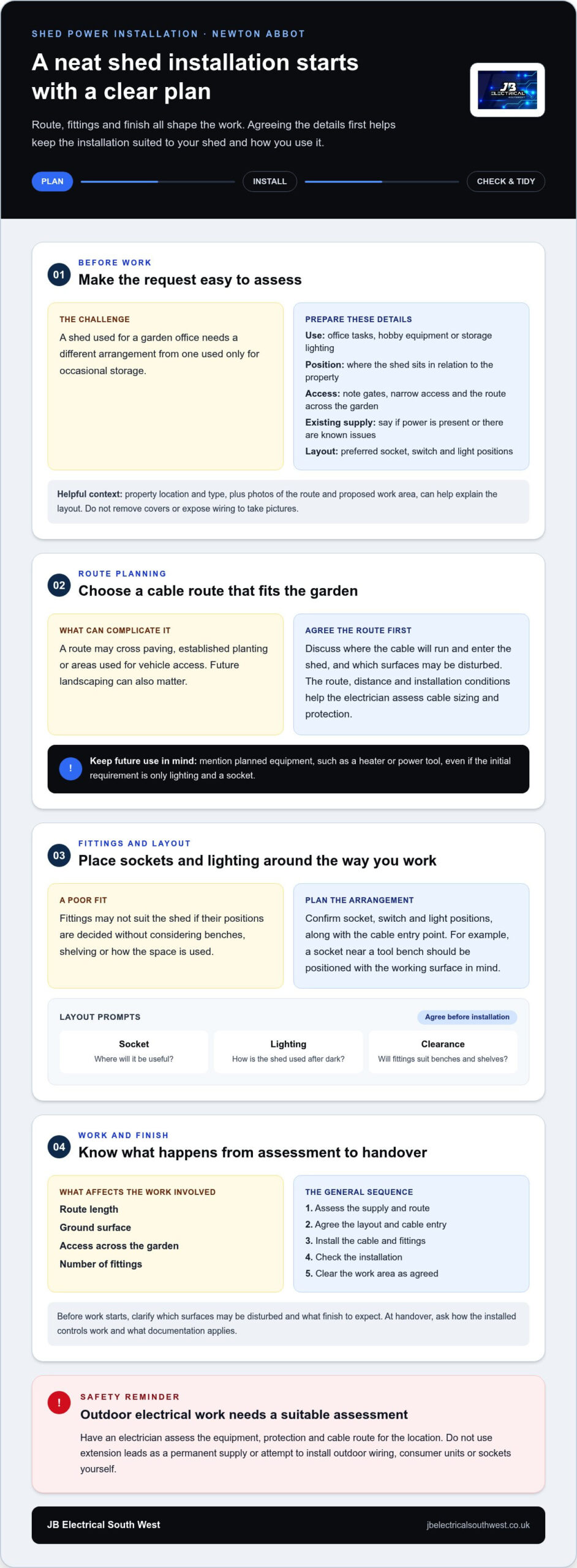
For shed power installation in Newton Abbot, make your first enquiry easy to assess. Give the property location, explain where the shed sits in the garden and describe what you want to use inside it. A workspace with lighting and a socket has different requirements from a shed used only for occasional storage.
Include these details in your message or have them ready for a call:
- The Newton Abbot address or area, plus whether the property is a house, business or rental.
- The shed’s distance and position relative to the main building, with any gates or narrow access noted.
- Your intended use, such as garden office tasks, hobby equipment or storage lighting.
- Whether power is already present, and any known issues such as tripping or damaged fittings.
- Any preferences for socket, switch or light positions, and how you use the shed after dark.
Photos can help explain the layout, especially a view from the property to the shed and a clear image of the proposed work area. Don’t remove covers or expose wiring to take pictures. If you can’t safely photograph a feature, a brief description is enough. Keeping these details together helps the electrician understand your request and identify what to discuss during an assessment.
What are the electrical safety requirements for outdoor circuits and garden sheds in the UK? Outdoor electrical work should be planned for its location and exposure. A competent electrician can assess suitable equipment, protection and cable routing. Don’t use extension leads as a permanent supply or attempt to install outdoor wiring yourself.
Before agreeing to work, ask for the proposed scope to be explained in plain language. Clarify where access may be needed, how the cable route will be planned and what finish to expect around disturbed surfaces. If the shed is not yet built, share its planned position and construction stage. This can help avoid a route that conflicts with a path, planting bed or future garden changes.
How can you find a NICEIC or NAPIT registered electrician in Newton Abbot? Use the NICEIC or NAPIT register to find electricians serving the area, then check that the listed business name and registration details match. Before booking, ask for the proposed work and any relevant certification to be explained.
Keep a written record of the agreed work and questions raised during your enquiry. Note whether you need lighting, sockets or both, and whether the shed will be used regularly. Clear information keeps the discussion focused on the installation you need, rather than assumptions about the garden or building.
Installation workmanship and tidy-up
Good workmanship shows in the cable route, secure fittings and finish around the shed. Before work starts, agree where the supply will enter and how the garden will be left afterwards.
Armoured cable sizing and burial depth
How are armoured cable size and burial depth chosen for a shed supply? The electrician assesses the planned load, cable route, distance from the property and installation conditions. These factors inform cable sizing and how an underground route needs protecting. A long run to a garden office, for example, calls for a different assessment from a short route beside a building.
Ask for the proposed route to be explained before work begins. Paths, planting areas, vehicle access and future landscaping can all affect where a buried cable runs. Agreeing the route helps avoid later disruption and makes it clear where the supply enters the shed.
Consumer units and shed sockets
How can a consumer unit and sockets be installed safely in a shed? Have an electrician assess and install the supply and protective arrangements. The position of the consumer unit, sockets and switches should suit the shed’s use and layout, with fittings easy to reach and use.
For example, sockets in a bench-mounted tool area may need to sit clear of the working surface, while a garden office may need a different arrangement. Don’t attempt to fit a consumer unit or connect sockets yourself. Ask how the completed installation will be checked and what documentation applies.
Installation steps and timing
What steps and time are involved in installing shed electricity? The work generally involves assessing the supply and route, agreeing the layout, installing the cable and fittings, checking the installation and clearing the work area. The route length, ground surface, access and number of fittings all affect the work involved.
A clear path across the garden can make access simpler than a route crossing paving or established planting. Before starting, the electrician can explain the planned sequence and how the work may affect the shed or surrounding area.
Before work starts, confirm the socket and light positions, cable entry point and expected finish where the route meets the building. Marking your preferences on a simple sketch can prevent confusion, especially if the shed has shelving or a workbench.
During installation, look for a considered finish: cables follow the agreed route, fittings sit neatly and any openings made for the work are dealt with as agreed. Ask which surfaces may be disturbed, such as lawn, paving or a shed wall. This sets clear expectations for the tidy-up.
At handover, ask for an explanation of the installed controls and any paperwork relevant to the work. If you plan to add equipment later, mention it before installation. A future heater or power tool can affect the planned arrangement, even if you initially need only lighting and a socket.
Shed installation service across the South West
Across the South West, shed layouts and access vary from property to property. A useful assessment considers the building, its intended use and the proposed electrical work together.
Choosing a shed electricity supply
The aim is to match the installation to your plans, not to choose equipment by name alone. Describe how often you’ll use the shed, what you expect to run and whether its purpose may change. A garden store, hobby room and home workspace place different demands on the installation.
Should you choose mains power, solar or an extension lead? The right approach depends on intended use, equipment and the property layout. Discuss these details with an electrician instead of assuming one option suits every shed. A temporary lead also needs careful management around people, weather and garden activity.
For a Newton Abbot project, note the shed’s position and any access limits. A route that crosses a path or established garden bed may affect how the work is planned. Share any expected garden changes so the proposed installation can account for them.
Permissions and electrical requirements
Electrical requirements concern the installation, while planning permission concerns the shed and its use. Keep those questions separate when preparing for work. Describe whether the building is existing or planned, and whether it will be used for storage, hobbies or regular work.
Is a 30mA RCD required for shed power installation in the UK? A blanket yes or no cannot be given without details of the circuit and installation. The electrician should assess the protective arrangements needed for the specific work, rather than treating one device as the answer for every shed.
Before work begins, agree what will be installed, where access is needed and how the affected area will be left. Ask for the scope and any relevant paperwork to be explained in plain language. This is especially useful when the shed is part of a wider garden project or other building work.
What are the risks of DIY shed wiring, damp and fire hazards? Incorrect connections or damaged wiring can create electric shock or fire risks. Damp can affect electrical equipment, so don’t install or alter shed wiring yourself. Tell the electrician about water ingress, damaged fittings or repeated circuit trips.
For example, a shed used as a workshop may contain equipment and stored materials that affect access to fittings. Keep the intended layout in mind during planning, and raise concerns about damp or damage before work starts. This gives the electrician relevant information and keeps the assessment focused on how the building is used.
Electricity supply options for a garden shed in Newton Abbot
The right supply for a garden shed depends on what you’ll power and how often you’ll use it. In Newton Abbot, distinguish occasional lighting from regular use of several appliances. A garden store with a single light has different demands from a workspace with a computer, task lighting and tools.
Next, list the equipment you expect to use at the same time. A kettle, heater or power tool may place different demands on the supply from a phone charger or small lamp. Sharing these details helps an electrician assess the proposed circuit and whether the property’s existing supply is suitable. Don’t assume an available socket can support every shed appliance.
The route between the house and shed is another key decision. A direct route across open ground differs from one that must pass paving, planting or a driveway. For example, a Newton Abbot garden with a patio between the house and workshop may need more planning than a clear, accessible route. The route affects the installation method and disruption to surrounding surfaces.
Use these questions to clarify your likely needs before discussing options:
- Will the shed be used occasionally, or as a regular workspace?
- Do you need lighting only, or sockets for equipment as well?
- Which appliances might run at the same time?
- Does the planned cable route cross paving, lawn or a driveway?
A mains supply is generally worth discussing for regular use, but its suitability depends on the property’s electrical system and the route. An electrician can assess the existing supply, proposed demand and protective arrangements together. If you’re planning an office, mention equipment such as a computer, printer or heater before agreeing the layout.
An extension lead is a temporary arrangement, not a substitute for a planned permanent installation. Its position, condition and exposure to garden traffic or weather matter. If the shed needs dependable power for routine work, ask for permanent options to be assessed rather than relying on a lead as your needs change.
For a clear decision, give the electrician your appliance list, intended use and preferred cable route. These details help compare options against the Newton Abbot property itself, rather than choosing a supply based on the shed alone.
Before settling the cable route, consider the shed’s base and access during installation. At least two people should unpack a Power Sheds garden shed, and its floor should be at least 25mm above the surrounding ground level to help avoid flooding. The recommended concrete base is 75mm of concrete on top of 75mm of hardcore; a suitable paving slab base uses slabs laid on top of 50mm of sharp sand. Shed framing for sheds supplied in Newton Abbot uses pressure-treated timber measuring 50mm X 50mm.
Planning permission or building regulations for shed electrics in England
For a shed in England, consider two separate matters: whether the structure raises planning questions, and which building regulations apply to the electrical work. They relate to different parts of the project, so one decision should not be treated as automatically settling the other.
Start by describing the shed and how you intend to use it. An existing storage shed, a planned garden building and a regularly used workspace may raise different questions about the overall project. Note whether the building is already in place, whether its use is changing and whether other building work is planned alongside the electrical installation.
For the electrical work, record what is proposed and ask which compliance route applies in England. The answer depends on the work and its circumstances, not simply on the word “shed”. Keep a written description of the work with your correspondence so the scope and arrangements discussed before installation remain clear.
A certificate statement must be read in its proper jurisdiction. According to Welsh Government, a registered electrician must arrange for a building regulations compliance certificate within 30 days of completing the work. This states Welsh Government’s requirement, not an England-specific timeframe; for a Newton Abbot installation, establish the applicable English arrangements and paperwork.
Before booking, clarify these points with the electrician:
- What electrical work is included in the agreed scope?
- Which building regulations process applies to that work in England?
- What completion documents will relate to the installation?
- Are any planning questions about the shed separate from its electrical work?
Keep the answers with the property records. If a future owner, landlord or electrician needs to understand the installation, a clear scope and relevant paperwork can help explain what was done. If the shed is part of a wider project, describe that context at the outset rather than discussing the wiring in isolation.
Planning questions depend on the structure and its proposed use, while electrical compliance concerns the installation. Treat them as separate checks. For example, adding wiring to a building already used as a garden workspace is an electrical project, but it does not by itself settle planning questions about the building.
Share the project details before work starts, including whether the shed is existing or planned and how it will be used. An on-site assessment can relate the electrical scope to the actual property and clarify the next steps. Discuss the shed electrical work with JB Electrical South West | Domestic & Commercial Electrician in Devon if you need advice on your shed power installation Newton Abbot project.
You must carefully consider the building and its supply arrangements. UK Government states that Part P covers electrical installations in sheds when the electricity comes from a source located within or shared with a dwelling. Include the supply arrangement when describing the proposed work: say whether the source is within the dwelling or shared with it, if known. Ask the electrician how this affects the compliance route for the installation, and record the answer alongside the agreed scope. If the source arrangement is unclear, resolve that point before relying on assumptions about which process applies. Keep the planning discussion separate.
JB Electrical South West | Domestic & Commercial Electrician in Devon: Domestic electrical installations and repairs
JB Electrical South West | Domestic & Commercial Electrician in Devon provides domestic electrical installations and repairs. For a Newton Abbot shed project, it’s a practical next step when you’re ready to discuss a permanent supply, sockets or lighting. Share how you plan to use the shed, its position and any preferred fitting locations to give the conversation a clear starting point.
JB Electrical South West takes a customer-focused approach, with transparent quoting and free estimates. The proposed work can be discussed in relation to your property and the installation needed, rather than assuming every shed has the same requirements.
If you’d like advice or an estimate for your project, contact JB Electrical South West or visit the website.
Plan your shed’s next step
Let your plans for the space guide the next conversation. Think about how you want the shed to function over time, and note any changes you expect as your needs develop. This helps keep the project focused on a practical outcome rather than a quick fix.
For shed power installation in Newton Abbot, share the intended use and details that could affect the work. An on-site assessment can relate your plans to the property and help establish a suitable scope. If the garden or shed layout may change, mention that early in the discussion.
Contact JB Electrical South West to discuss your shed project and take a considered next step.