1. Get Your Electrics Inspected Regularly (EICR)
One of the most important electrical safety tips for homeowners is to have your property’s electrical installation professionally checked. In the UK, this is done through an Electrical Installation Condition Report (EICR) — a thorough inspection carried out by a qualified electrician.
An EICR assesses your wiring, fuse board, sockets, and overall electrical system for any faults or hazards. It uses a grading system to flag issues:
- C1 – Danger present: Immediate action required
- C2 – Potentially dangerous: Urgent remedial work needed
- C3 – Improvement recommended: Not immediately dangerous, but worth addressing
While homeowners aren’t legally required to hold a valid EICR (unlike landlords), having one carried out every 10 years — or when moving into an older property — gives real peace of mind. If you live in Torquay or anywhere across Devon and haven’t had your electrics checked recently, JB Electrical can arrange an EICR inspection at a time that suits you.
2. Never Overload Your Sockets

Overloaded sockets are one of the leading causes of electrical fires in UK homes. Each socket in your home is rated to handle a maximum load — typically 13 amps or 3,000 watts. Plugging in too many high-powered appliances at once can overload a circuit, causing overheating and potentially fire.
Here’s how to stay safe:
- Avoid plugging multiple high-wattage appliances (like washing machines, kettles, or heaters) into the same socket or extension lead
- Never “daisy-chain” extension leads — plugging one into another
- Always buy extension leads from reputable retailers and check their amp rating before use
- Treat extension leads as a temporary solution, not a permanent fixture
If you regularly find yourself short of sockets in your Devon home, the safest solution is to have additional sockets professionally installed. JB Electrical offers socket installation across Torquay, Exeter, and all of Devon.
3. Keep Electricity and Water Well Apart
Water and electricity are a deadly combination. The UK has some of the strictest regulations in the world regarding electrical installations in bathrooms and kitchens — and for good reason.
Key rules to follow at home:
- Never use portable electrical appliances (hairdryers, radios, heaters) in the bathroom
- Always dry your hands thoroughly before touching any switches or plugs
- Keep electrical appliances well away from sinks, baths, and water sources in the kitchen
- Don’t use outdoor power tools or garden equipment when conditions are wet
- If your home experiences flooding, do not use any electrics until a qualified electrician has inspected the property
4. Test Your RCD (Residual Current Device) Regularly

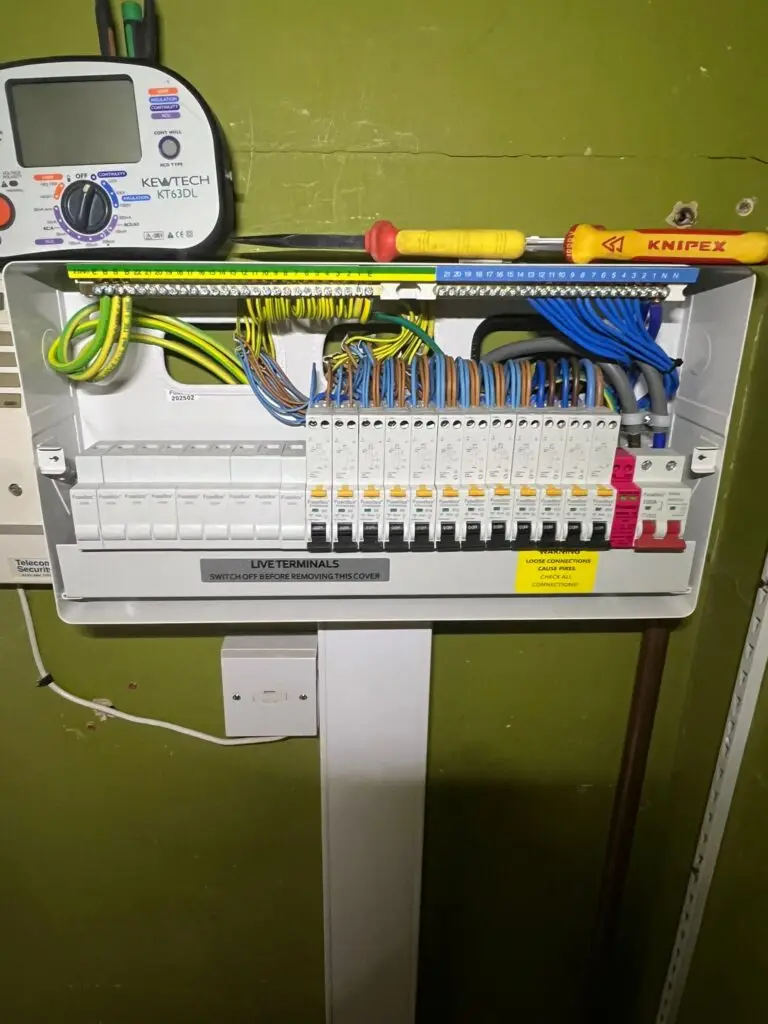
An RCD (Residual Current Device) is a life-saving safety device built into your consumer unit (fuse box). It monitors the flow of electricity through your circuits and, if it detects a fault — such as someone accidentally touching a live wire — it cuts the power in as little as 1/40th of a second.
RCDs have been mandatory in new UK homes since 2008, but many older properties in Devon may still lack full RCD protection. Here’s what to do:
- Test your RCD every three months — press the test button on your consumer unit. If it trips the power, it’s working correctly. If nothing happens, contact a qualified electrician immediately
- If your consumer unit doesn’t have an RCD, speak to JB Electrical about an upgrade — it’s one of the most effective electrical safety improvements you can make
5. Know the Warning Signs of Faulty Wiring
Older properties across Devon and Torquay — particularly Victorian and Edwardian terraces — may have electrical wiring that is outdated or deteriorating. Knowing what to look for could prevent a serious accident.
Warning signs to watch for:
- Flickering or dimming lights
- Frequently tripping circuit breakers or blown fuses
- Buzzing, crackling, or sizzling sounds from sockets or switches
- Burn marks, scorch marks, or discolouration around sockets and switches
- A persistent burning smell with no obvious cause
- Sockets or switches that feel warm or hot to the touch
- Old-style round-pin sockets, fabric-covered cables, or a wooden fuse box (signs of very old wiring)
If you notice any of these signs in your Devon home, don’t ignore them. Contact a qualified electrician in Torquay or Devon as soon as possible. JB Electrical offers fast electrical fault finding and repairs across the region.
6. Be Smart About Extension Leads and Chargers
Extension leads and phone chargers are so commonplace that we rarely think twice about them — but misuse is a significant cause of electrical fires across UK homes.
- Never leave devices charging overnight — especially laptops, phones, and e-bikes with lithium batteries
- Never buy counterfeit or unbranded chargers. Always look for the British Safety Mark (BS 1363)
- Always fully unwind cable drum extension leads before use — a coiled lead can overheat
- Replace any extension lead or charger with damaged, frayed, or burnt casing immediately
- Don’t run cables under carpets or rugs where heat can build up unnoticed
7. Take Extra Care in the Kitchen
The kitchen is one of the most electrically demanding rooms in any Devon home, with multiple high-powered appliances in use throughout the day. A few simple habits make a big difference:
- Don’t let kettle, toaster, or appliance leads trail near or across your hob
- Keep toasters and other appliances clean — built-up grease and crumbs are a fire risk
- Empty your tumble dryer’s fluff filter regularly in line with manufacturer guidelines
- Switch off and unplug appliances when not in use, rather than leaving them on standby
8. Don’t DIY Your Electrics
With so many tutorial videos online, it’s tempting to take a DIY approach to electrical work. However, DIY electrical errors account for around 50% of all electric shocks in UK homes. Certain electrical work — such as adding new circuits, consumer unit work, or bathroom electrics — is classified as “notifiable work” under Part P of the Building Regulations and must be carried out by a certified electrician.
Attempting this work yourself not only puts you at risk of injury, but can also invalidate your home insurance and create problems when you come to sell your property. For all electrical work at your Devon or Torquay home, always use a qualified, NICEIC-accredited electrician like JB Electrical.

9. Register Your Appliances
This is one of the most overlooked electrical safety tips for homeowners. Registering your electrical appliances with the manufacturer means you’ll be automatically notified if your product is recalled due to a safety fault. You can check whether any of your appliances have been recalled at Electrical Safety First’s recall checker.
10. Install and Maintain Smoke Alarms
Even with all the precautions in the world, electrical faults can still occur. A working smoke alarm gives you and your family the vital early warning needed to get out safely. Make sure you:
- Have at least one working smoke alarm on every floor of your Devon home
- Test your smoke alarms monthly by pressing the test button
- Replace batteries annually, or choose alarms with sealed 10-year batteries
- Replace the entire alarm unit every 10 years
JB Electrical – Your Trusted Electrician Across Devon and Torquay
Following these electrical safety tips for homeowners is the first step to a safer home. But when you need a professional eye — whether for an EICR inspection, a consumer unit upgrade, fault finding, or any other electrical work — JB Electrical is here to help.
We’re a fully NICEIC-accredited electrical company serving homeowners and businesses across Devon, including Torquay, Exeter, Paignton, Torbay, and beyond. Our friendly, experienced electricians are on hand to make sure your home is safe, compliant, and up to date.
Contact JB Electrical today for a free, no-obligation quote.


